Multifamily FF&E: Furnishing Apartments and Common Areas
A single multifamily property runs three distinct furniture programs: model units that sell the lease, furnished apartments that handle daily tenant use, and amenity spaces that take the heaviest traffic on the property. Each program requires a different durability tier and a separate specification strategy.
Multifamily FF&E (furniture, fixtures, and equipment) is more complex than a single hotel or office build because the same building contains spaces with fundamentally different durability demands. This guide walks through each program, how to package purchasing efficiently, and how to sequence delivery around construction milestones.
Quick answer: Model units need staging-quality pieces that photograph well. Furnished apartments need pieces built for daily tenant wear. Amenity spaces need contract-grade construction even when the aesthetic is residential. Treating all three the same is the most common and most costly mistake in multifamily FF&E. The full product range for residential projects is at our residential FF&E catalog.
The Three Furniture Programs in One Building
Every multifamily developer knows that a property is not one building project but several parallel ones running on the same site. The furniture side mirrors that split. Model units, furnished apartments, and amenity spaces each have a different owner (leasing team, asset manager, property operations), a different performance expectation, and a different cost profile. Collapsing them into a single FF&E scope creates specification errors and budget surprises.
The clearest way to manage this is to treat the three programs as separate line items in the project budget from the start, even if they share some finishes or color palette. That separation makes it easy to trade off costs within each program without accidentally downgrading the wrong one.
Model Units: Furniture That Sells the Lease
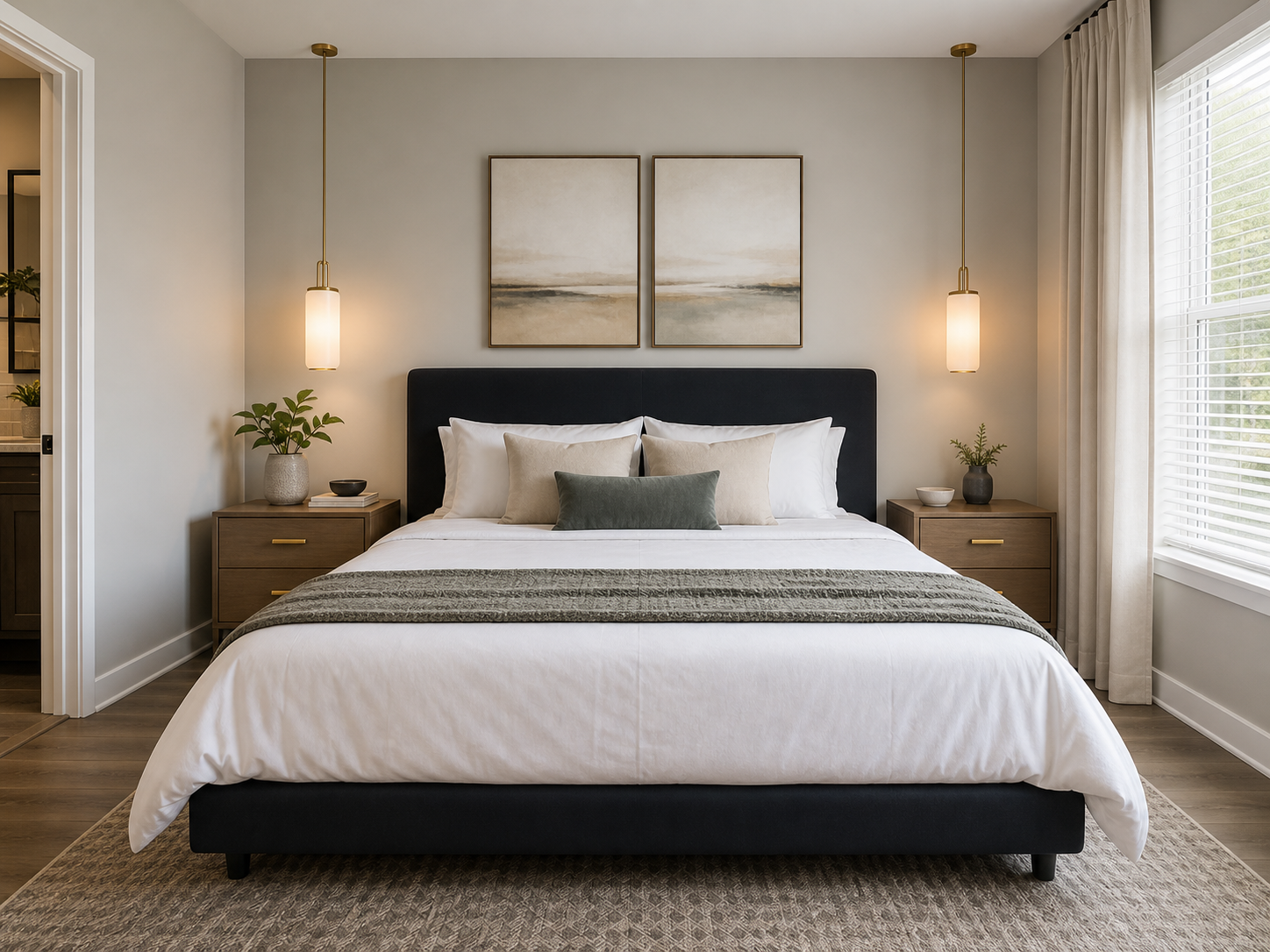
Model unit furniture does one job: it makes a prospective tenant say yes during a tour. The pieces need to be visually compelling, photograph well for digital listings, and show the unit at its best possible scale. They are not being sat on eight hours a day. That changes the specification logic significantly.
For model units, prioritize visual impact, proportion, and finish quality. Pieces should make the room feel larger and more purposeful than it would with blank walls. Staging accessories, art, and lighting all matter here because they read in photos. Durability is secondary. A sofa that looks perfect in a 500 square foot studio on day one and gets replaced at year two is a better investment than a contract-grade piece that reads as generic in listing photos.
The one exception is floor protection. Model units are walked through constantly during lease-up, sometimes dozens of times per day. Area rugs should be non-slip and resistant to edge curl. Hard surface furniture feet should have felt pads that will not scratch the finished flooring, because model unit flooring often goes straight into a lease-ready unit after lease-up ends.
Model unit packages also benefit from a consistent design direction across all unit types in the building. Prospective tenants tour multiple layouts. A cohesive palette that moves between the studio, one-bedroom, and two-bedroom models reinforces the brand of the building and avoids the impression that someone grabbed pieces from different sources.
Furnished Units: Built for Daily Use
Furnished apartments are a different problem entirely. These pieces go through a full lease cycle, sometimes two or three, before refresh. A tenant cooking every night, working from the dining table, and using the sofa as their primary seat for a year will stress test every joint, every fabric, and every surface finish.
The specification baseline for furnished units should match or exceed what you would specify for a mid-grade hotel guestroom. That means upholstery rated for at least 50,000 double rubs (Wyzenbeek), hardwood or metal frames with corner blocking or welded joints rather than stapled construction, and case goods with durable veneer or laminate surfaces rather than thermofoil finishes that delaminate under humidity.
Bed frames and mattress platforms take particular stress. Specify steel slat systems or solid platform bases rather than thin wood slat assemblies. Dresser and nightstand drawer slides should be full-extension with soft-close mechanisms rated for commercial cycle counts, not the lower-rated residential hardware that loosens after a year of daily use.
Dining furniture in furnished units needs the same durability thinking. A four-person dining table gets used as a desk, a craft surface, and a homework station in addition to meals. Specify a high-pressure laminate top or a sealed solid wood surface that cleans easily and does not show water ring damage.
Our full range of furnished unit furniture is at the residential products section, which covers beds, case goods, dining tables, and seating configured for apartment programs.
Amenity and Common Areas: Contract-Grade Required
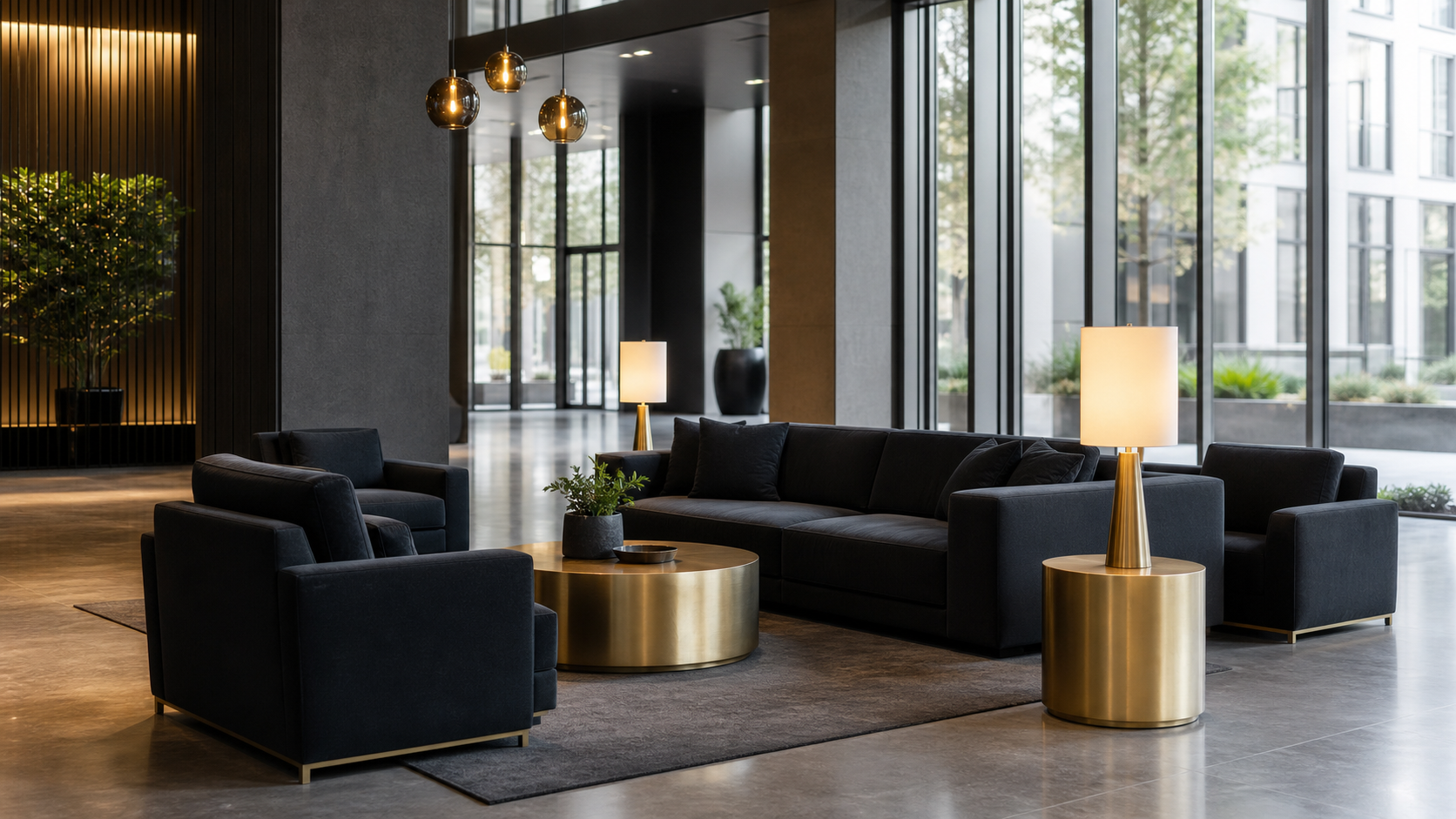
Amenity spaces are where the residential-versus-commercial line matters most. A lobby, a coworking lounge, a clubroom, or a fitness-adjacent seating area gets foot traffic from every resident every day. That is a commercial traffic load, not a residential one.
Developers sometimes specify residential-grade furniture for amenity spaces because the design intent is residential in feel and the unit price is lower. In our project experience, those pieces fail within one to two years and end up costing more in replacement than a correct specification would have up front.
The key amenity spaces and what they need:
- Lobby and entry seating: Upholstered lounge chairs and sofas specified at contract grade (50,000 double rub minimum), with commercial-weight cushion foam that resists permanent compression, and frame construction rated for repeated daily use. Leg caps and floor glides matter here because lobby floors are hard surface and get scratched by light residential furniture.
- Coworking and resident lounge areas: Task seating should meet the same ANSI/BIFMA durability standards as office furniture, not residential desk chairs. Lounge seating in these spaces gets used for hours at a stretch. Tables need commercial surface finishes because they get coffee cups, laptops, and takeout containers every day.
- Fitness-adjacent and wellness seating: Benches and seating near fitness areas get wet clothing, moisture, and direct contact from users in workout gear. Specify moisture-resistant upholstery or sealed hard surfaces. Avoid upholstered pieces with standard woven fabric in these zones.
- Outdoor amenity areas: Pool decks, rooftop terraces, and courtyard seating require powder-coated aluminum or marine-grade stainless frames with solution-dyed acrylic upholstery or slatted surfaces that drain and dry quickly. Standard outdoor residential furniture degrades within two seasons under daily commercial use.
The design aesthetic of amenity spaces can absolutely read as residential. The materials and construction underneath it just need to perform at a commercial standard. See our hospitality FF&E guide for more detail on contract-grade specifications for public-facing spaces.
Package Purchasing vs. Piecemeal
Buying furnished unit furniture piece by piece from retail sources looks cheaper per item but creates real problems at scale. Lead times vary by vendor, delivery windows conflict with construction schedules, and you end up with mixed finish tones and mismatched hardware across units that residents notice and photograph in reviews.
Package purchasing means specifying a complete set of pieces for each unit type and ordering them together from a single source. For a development with two hundred furnished units across three layouts, that means three packages ordered in quantity, delivered on a coordinated schedule, and installed by a crew that knows the floor plan of each unit type.
The advantages are real. Volume across unit types generates better pricing. A single point of contact handles delivery scheduling and damage claims. Installation crews who have assembled the same package forty times work faster and make fewer errors. And the finished units look consistent, which matters for leasing photos and for the resident experience.
For model units, the package approach also pays off. Specifying the model unit furniture as a defined package means it can be replicated quickly if a second phase of the development opens, or if a sister property wants to match the aesthetic.
Timing the package order correctly is covered in the FF&E procurement timeline guide, which walks through the lead times involved and how to back-schedule from your certificate of occupancy date.
Coordinating Delivery With Construction Phases
The most common and most damaging mistake in multifamily FF&E is delivering furniture too early. Pieces that arrive before finish trades are complete get scratched, stained, and damaged. Model unit furniture delivered before the flooring is finished or the walls are painted ends up in the wrong condition for its first leasing tour.
The correct sequencing is: certificate of occupancy issued, punch-list complete in the target area, floor protection removed, then FF&E delivery and install. For model units, that typically means the furniture delivery is scheduled four to six weeks before the first lease-up tours begin, which gives time for install, staging, and photography.
For furnished unit packages, phased delivery by floor or building section is the standard approach. Floors or wings that reach certificate of occupancy first take delivery first. This keeps furniture from sitting in a staging area or a parking lot while other areas of the building are still under construction.
Amenity space furniture should be scheduled last, after the common areas are fully finished and before the first residents move in. Lobbies and lounges that are furnished and accessible on move-in day make a strong first impression and reduce move-in complaints.
Working with a supplier that includes install-day coordination as part of their scope matters here. At DMD, install-day coordination is included in every project scope. That means the delivery crew knows the construction schedule, arrives with the right pieces in the right order, and handles the floor protection and placement correctly so that the finished space is ready without requiring the developer's team to manage the logistics directly.
Refresh Cycles and SKU Standardization
Multifamily FF&E does not stay in service indefinitely. Furnished units refresh on a cycle tied to wear and lease turnover. Amenity spaces refresh on a longer cycle, typically driven by condition and competitive pressure in the market. Planning for refresh from the start of the original specification process saves significant time and money later.
The most practical lever is SKU standardization. If all buildings in a portfolio use the same dining chair model, the same sofa frame, and the same case good series, then replacement pieces are always available on short reorder without a new specification process. Maintenance staff learn one product system. Quantity across the portfolio generates volume pricing even on small replacement orders.
Standardization does not mean every building looks identical. Finish options, fabric colors, and accent pieces can vary by property while the underlying structural products stay constant. A portfolio might run the same sofa frame across three properties in three different fabric colors, which gives each property its own look while keeping the backend procurement and maintenance process simple.
For amenity spaces, budget for a partial refresh at the five to seven year mark for high-traffic pieces like lobby seating and coworking chairs. Full replacement of well-specified amenity furniture at the ten to twelve year mark is a reasonable planning horizon for properties that want to stay competitive in their submarket.
Establishing that refresh plan at the time of original specification also means you can build it into the capital expenditure budget from day one, which is cleaner for asset managers and lenders than treating replacement as an unplanned expense.
Browse the full range of furnished unit and amenity options at our residential FF&E products page.
Working on a multifamily development and want to talk through the three-program approach for your specific building? We are happy to work through scope and timing with your team.
Schedule a ConversationFrequently Asked Questions
What is the difference between model unit furniture and furnished unit furniture in multifamily?
Model unit furniture is chosen to photograph well and create an emotional impression during leasing tours. It prioritizes appearance and staging over daily durability. Furnished unit furniture must survive real tenant use over a one to three year lease cycle, so it requires higher abrasion ratings, more durable frame construction, and finishes that clean easily. The two programs should be specified separately, not from the same product list.
Do multifamily amenity spaces need contract-grade furniture?
Yes. Lobby seating, coworking lounges, and fitness-adjacent areas take traffic from every resident every day. Residential-grade pieces will fail within one to two years under that load. Even when the design intent is residential in feel, the specification must meet contract-grade durability standards: minimum 50,000 double-rub abrasion ratings for upholstery, commercial-grade frame construction, and commercial finishes on hard surfaces.
How should FF&E delivery be timed around a multifamily certificate of occupancy?
FF&E delivery should be scheduled to arrive after the certificate of occupancy is issued and after punch-list work and floor finishing are complete in each area. Furniture arriving before finish trades are done gets damaged. Model unit and amenity furniture typically ship four to six weeks before the first lease-up tours. Furnished unit packages can follow in phased waves tied to occupancy by floor or building section.
What is the benefit of standardizing SKUs across multiple multifamily buildings?
Standardizing SKUs across a portfolio means replacement pieces are always in stock or on short reorder, maintenance staff know exactly which items go where, and volume across buildings generates better pricing from the supplier. It also reduces the design review burden on future projects because the palette is already proven and approved.