
FF&E Procurement Timeline: What to Expect from Concept to Install
An FF&E procurement timeline runs from concept through scope, specification, manufacturing, QC, delivery, and install, typically spanning every phase from design through final project close out.
Lead times, approval cycles, and logistics coordination can make or break an opening date. Here is a realistic timeline for FF&E procurement on a commercial hospitality project, with guidance on where delays most commonly occur.
Quick answer: A typical FF&E procurement process runs 16 to 24 weeks from design concept to final installation. Custom or high-volume projects with complex specifications sit closer to 24 weeks; smaller scopes with standard product selections can complete in 16 weeks if approvals move quickly. Budget additional time for international shipping or port congestion. For the full procurement picture beyond scheduling, see our hospitality FF&E procurement guide.
Phase 1: Design and Specification (Weeks 1-4)
The procurement process begins before any vendor is contacted. The design team (whether an interior designer, FF&E consultant, or owner's representative) develops the design intent for each space, specifies materials and finishes, and produces a Bill of Quantities (BOQ) listing every furniture item, quantity, and specification. Structured procurement and construction management practices, including phased delivery coordination, are documented by the CMAA (Construction Management Association of America).
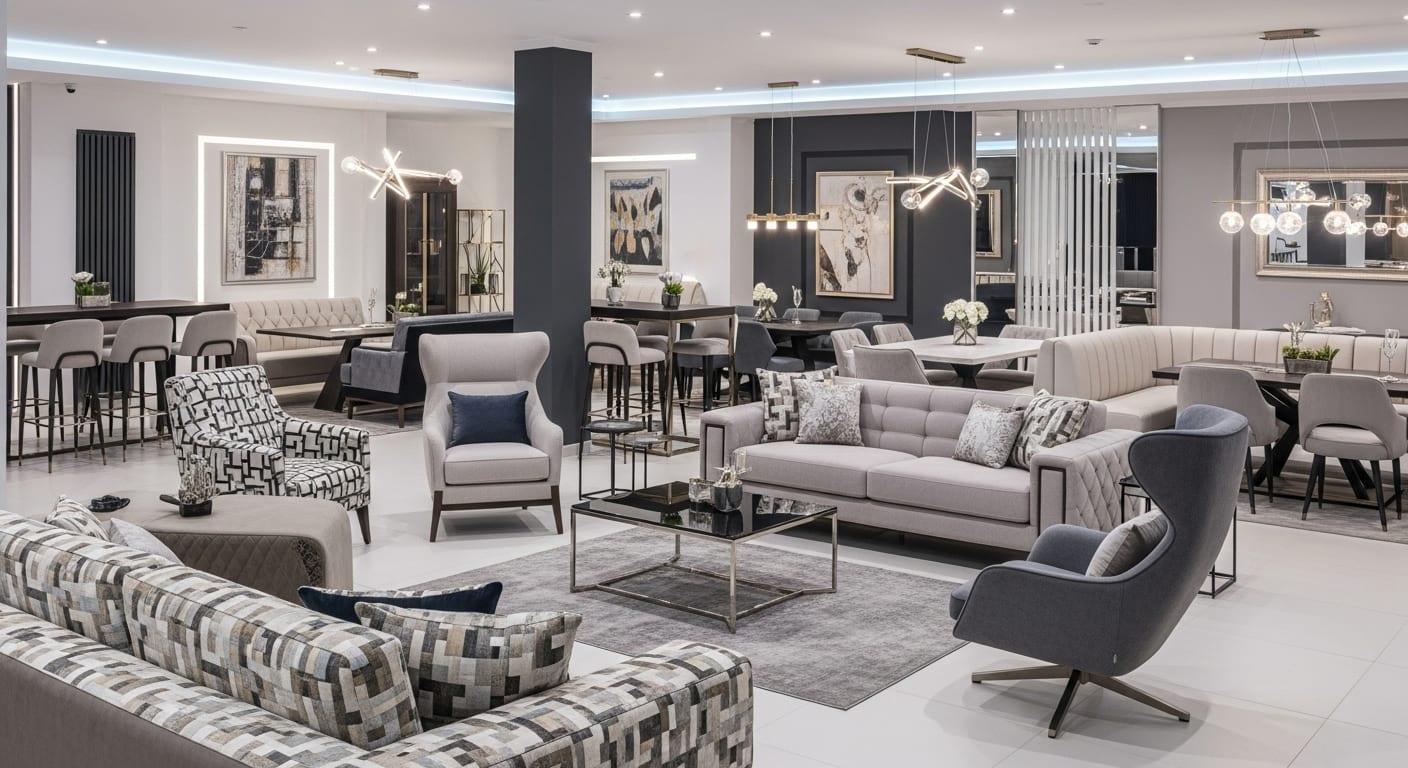
This phase includes space planning to confirm furniture sizes and clearances fit the floor plan, material selection for surfaces, frames, and upholstery, and finish coordination across all specified pieces. The quality of work done in this phase directly determines how smoothly the rest of the process runs. Vague or incomplete specifications at this stage generate clarification rounds that consume time later during bidding and manufacturing. If you are still defining the scope itself, our guide to what FF&E means in hospitality and our hotel guestroom furniture checklist are useful starting points for building a complete BOQ.
- Develop design intent drawings for each room type or space
- Confirm furniture dimensions against architectural drawings
- Select materials and finishes; obtain initial samples if possible
- Produce BOQ with complete item descriptions, quantities, and target specs
- Identify long-lead items that may require early ordering
Phase 2: Bidding and Vendor Selection (Weeks 4-8)
With a complete BOQ in hand, the procurement team issues a Request for Quotation (RFQ) to qualified furniture vendors. A well-run RFQ process gives vendors 10 to 14 days to respond, allows two to three rounds of clarification, and includes a structured evaluation of price, lead time, sample quality, and vendor track record on comparable projects.
Sample review is a critical step that many projects skip to save time, only to face costly remakes later. Specifying items that meet recognized commercial durability standards simplifies sample evaluation by giving the procurement team a defined acceptance benchmark. Requesting physical samples of key items, particularly upholstered pieces and surface finishes, before committing to a vendor identifies quality or color discrepancies before production begins. Sample approval should be formally documented with signed sign-off sheets that become the production reference standard.
Contract negotiation and purchase order issuance typically complete by the end of week eight. Delays at this stage often come from internal approval chains requiring multiple signatories, budget revisions, or indecision on material alternatives. Projects with a clear decision-making authority and pre-approved budgets move through this phase significantly faster.
DMD Furnishing provides FF&E project management services from specification through installation for hospitality projects.
View FF&E ServicesPhase 3: Manufacturing and Production (Weeks 8-18)
Once purchase orders are issued and deposits paid, manufacturing begins. Lead times vary considerably based on product type, level of customization, and the vendor's current production load:
- Standard catalog items with standard finishes: 6 to 10 weeks from order confirmation
- Custom items with standard materials: 10 to 14 weeks, including time for custom shop drawings, approval, and production scheduling
- Highly custom items (custom dimensions, exotic veneers, custom metalwork): 14 to 20 weeks or longer
During this phase, the procurement team should maintain regular production status updates with each vendor, typically weekly check-ins as delivery approaches. Shop drawing approvals for custom pieces must be returned promptly; a delayed approval of even three to four days can push a production slot back by one to two weeks if the vendor's workshop has a full schedule.
This is also the phase where material substitutions are most tempting. If a specified material is out of stock or has extended lead time, vendors may propose alternatives. Any substitution should be formally reviewed and approved by the design team before production proceeds. Verbal agreements without documentation create disputes at delivery.
Phase 4: Quality Control and Shipping (Weeks 18-20)
Pre-shipment quality control (QC) inspection is the last opportunity to catch defects, finish inconsistencies, or dimensional errors before furniture leaves the factory. For large orders, a physical factory visit by a QC inspector is standard practice. For smaller orders or trusted vendors, photographic documentation against the sample standard may be sufficient.
Items that fail QC inspection at this stage require repair or remake at the vendor's cost if the defect is manufacturing-related. This is why having a signed sample approval document from Phase 2 is essential: it defines the acceptance standard clearly and removes ambiguity about what constitutes a defect.
Shipping logistics for large FF&E orders involve coordination between the vendor, a freight forwarder, and the receiving site. Key decisions include:
- Whether to consolidate all vendors into a single container load or ship separately
- Packaging specifications: commercial furniture should be triple-wrapped and corner protected for transit
- Customs documentation requirements for international shipments
- Staging warehouse arrangements if the project site is not ready to receive on the manufacturing completion date
Phase 5: Delivery and Installation (Weeks 20-24)
Delivery coordination is often the most logistically complex phase of FF&E procurement. On large hospitality projects, furniture arrival is typically phased by floor or building section to align with the construction handover schedule. Not all rooms are available for furniture installation on the same day.
A staging area (either on-site or at a nearby warehouse) allows received items to be organized by room type and sequence before installation begins. This avoids the chaos of furniture for floors 10 through 15 blocking the lobby when only floors 1 through 5 are ready.
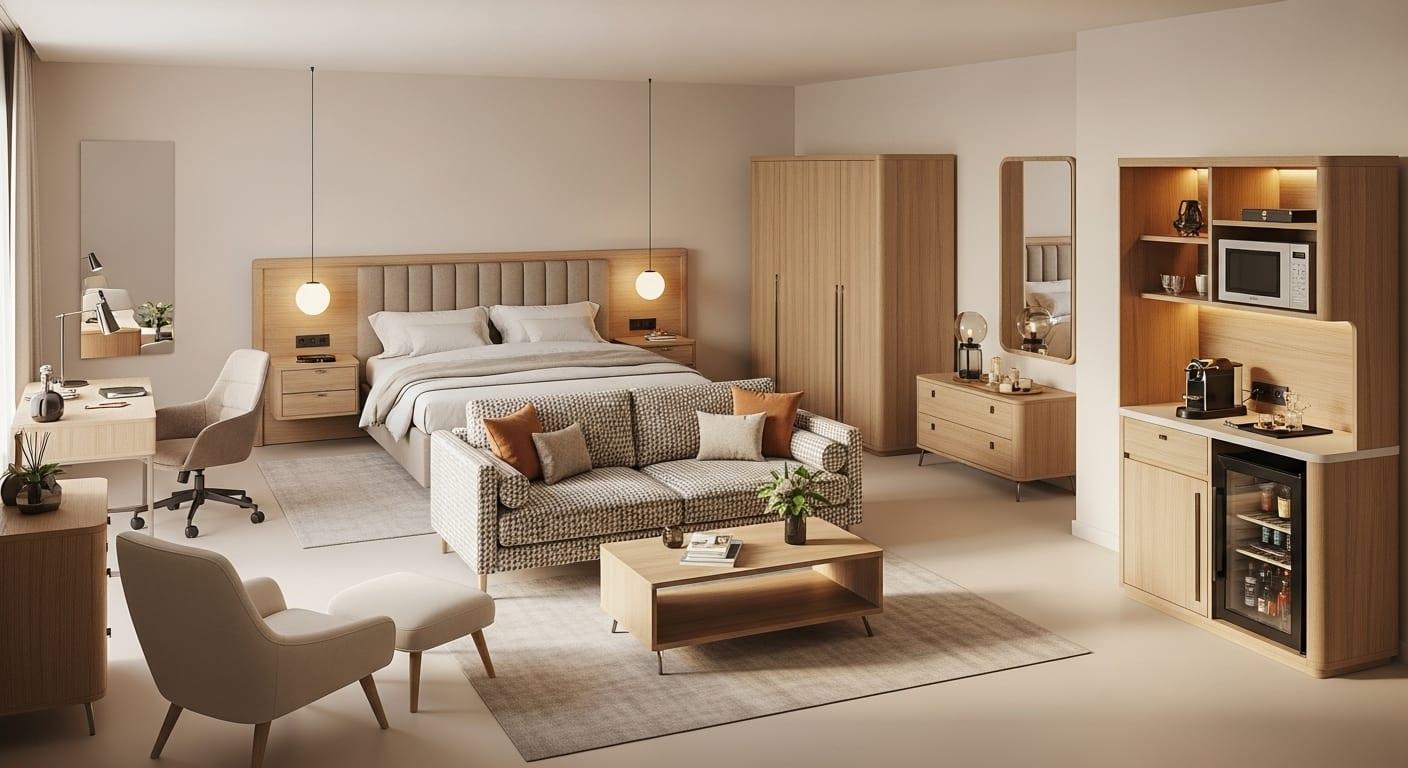
Installation itself requires coordination between the FF&E installer, the general contractor, and the site superintendent. Flooring, painting, and millwork must be complete before furniture can be placed and protected. A furniture installation punch list, documenting items received with damage or missing components, should be generated and tracked to closure before the final payment milestone.
Final walkthrough with the owner or owner's representative closes out the procurement contract and triggers the warranty period for commercial items.
Tips for Staying on Schedule
- Engage vendors early. Issue RFQs before the BOQ is fully finalized if necessary. Getting lead time data early helps identify whether the schedule is realistic before you are committed to it.
- Lock specifications before ordering. Changes after purchase orders are issued cause delays and additional costs. Get all stakeholder approvals on material selections before the RFQ goes out.
- Return approvals within 24 to 48 hours. Shop drawings, samples, and substitution proposals sitting in an inbox waiting for review are the most common source of schedule slip.
- Build float into the schedule. Plan for the installation date to be one to two weeks before the actual opening date to absorb delivery delays without affecting the opening.
- Identify long-lead items in Phase 1. Some items (specialty upholstery fabrics, custom metalwork, exotic veneers) have lead times that exceed the standard timeline. These should be ordered first, before the full BOQ is finalized if necessary.
Common Delays and How to Avoid Them
The most frequent causes of FF&E schedule overruns in commercial hospitality projects are:
- Late design decisions: Material or finish changes after orders are placed require production restarts. Freeze specifications before issuing purchase orders.
- Slow internal approvals: Define the approval chain and set response time expectations in writing at the project kickoff.
- Port congestion and shipping delays: For international shipments, add a 2 to 4 week buffer beyond the vendor's quoted delivery window.
- Site not ready for delivery: Coordinate furniture delivery dates with the construction schedule, not just the production completion date.
- QC failures at the factory: Thorough sample approval in Phase 2 reduces the risk of rejection at the factory inspection stage.
Ready to start planning your FF&E procurement? Schedule a consultation to discuss timeline, scope, and specifications.
Schedule a ConsultationFrequently Asked Questions
How long does FF&E procurement take for a hotel renovation?
A full hotel renovation FF&E procurement typically runs 16 to 24 weeks from design completion to installation. Projects with highly custom items or international sourcing should budget 24 weeks or more. Starting vendor engagement earlier than you think necessary is the single most effective way to protect the opening date.
What causes the most delays in FF&E projects?
Late design decisions, slow internal approval cycles, and site not being ready for furniture delivery are the three most common causes of schedule overruns. All three are preventable with clear process discipline: freeze specs before ordering, set approval response time expectations, and coordinate delivery dates against the actual construction completion schedule, not the target date.
When should I start FF&E procurement relative to the construction schedule?
Begin the design and specification phase at least 24 weeks before your target furniture installation date. If the construction schedule is 12 months, FF&E procurement should be underway by month three or four at the latest. Waiting until construction is nearly complete is the most common mistake. It compresses the manufacturing window and forces costly expedite fees or opening delays.
Do I need a pre-shipment QC inspection for every FF&E order?
Physical factory inspections are recommended for large orders, first-time vendors, and highly custom items where finish or dimensional accuracy is critical. For smaller reorders from a proven vendor, photographic QC documentation against an approved sample standard is often sufficient. The cost of a QC inspection is consistently less than the cost of a defective delivery requiring replacement.