Published · Updated · By DMD Furnishing Editorial Team
What Is FF&E? Meaning, Examples, and FF&E vs OS&E
FF&E (Furniture, Fixtures and Equipment) is the movable furniture, casegoods, seating, and fixtures that outfit a commercial hospitality building and are procured separately from the base construction.
FF&E (Furniture, Fixtures & Equipment) refers to every movable, non-structural element specified and installed during a hospitality fit-out. It covers the beds, seating, casegoods, light fixtures, and equipment that define a guest’s physical experience, and it is budgeted and procured entirely separately from the base building.
What Does FF&E Mean in Hospitality?
FF&E stands for Furniture, Fixtures & Equipment: the movable, non-structural items specified during a hotel or restaurant fit-out. It covers beds, casegoods, seating, decorative lighting, and in-room equipment, and is budgeted and procured entirely separately from the base building under its own capital line.
In construction accounting and hospitality development, FF&E is a formal line item that groups together all furnishings and equipment that can be moved without altering the building structure. The distinction matters because FF&E is generally depreciated differently than real property, and it is managed under a separate procurement track from base building construction. For the full buying process from budgeting through installation, see our hospitality FF&E procurement guide.
For a hotel, FF&E encompasses everything from the guestroom headboard and desk chair to the lobby lounge seating, restaurant dining tables, bar fixtures, and back-of-house equipment. If it can be removed and relocated without leaving a structural hole in the wall or floor, it likely qualifies as FF&E.
What Is Included in FF&E?
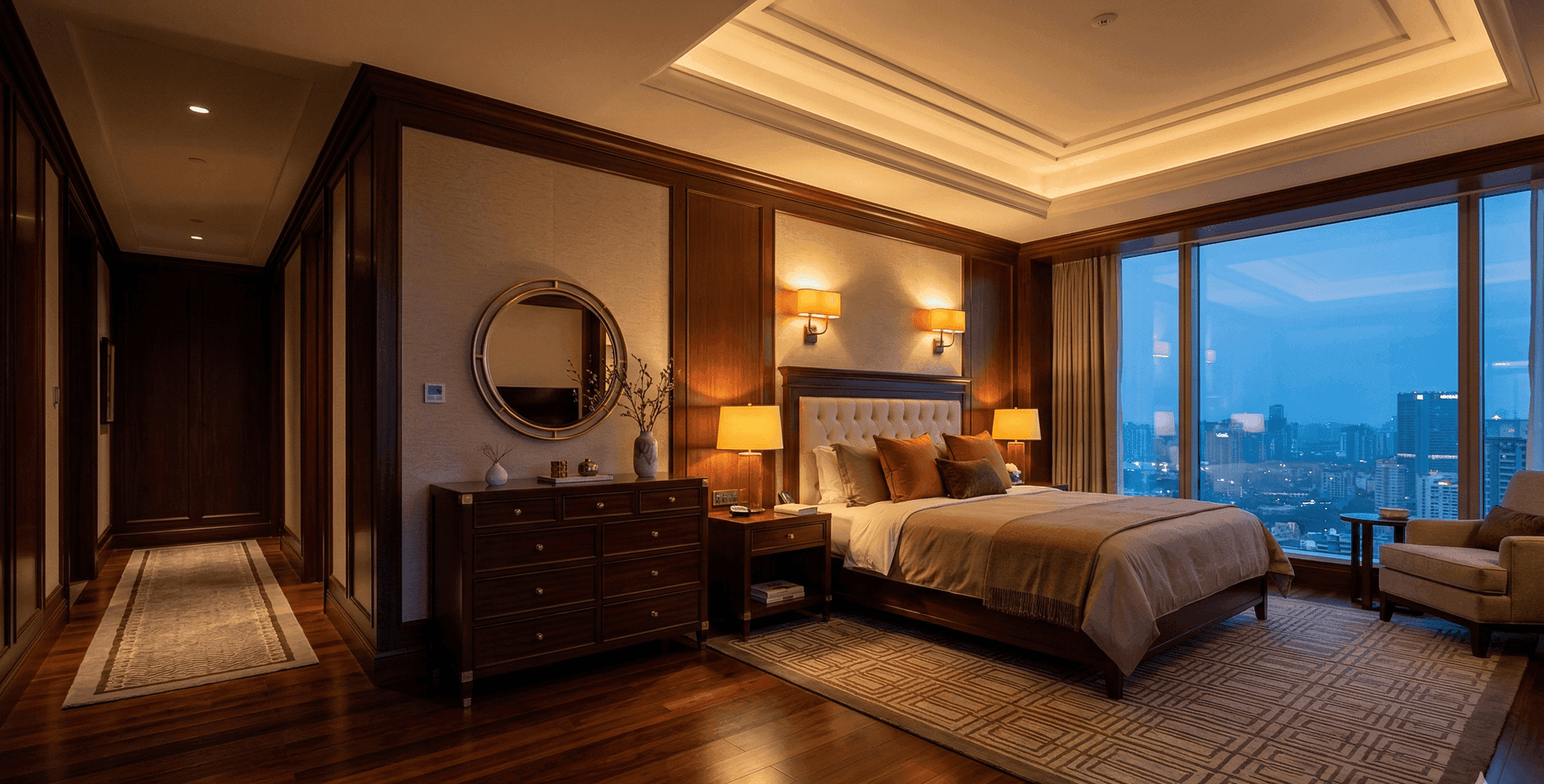
FF&E includes guestroom casegoods, seating, tables, decorative lighting, window treatments, artwork, televisions, minibars, safes, and commercial kitchen or fitness equipment. Anything movable that the owner specifies and installs, as opposed to built by the general contractor, generally qualifies; each category is tracked as its own budget sub-line.
The scope of FF&E varies by project type, but in a full-service hotel or resort environment it typically includes:
Furniture
- Guestroom casegoods: headboards, bed frames, nightstands, dressers, desks, and luggage benches
- Guestroom seating: desk chairs, lounge chairs, and ottomans
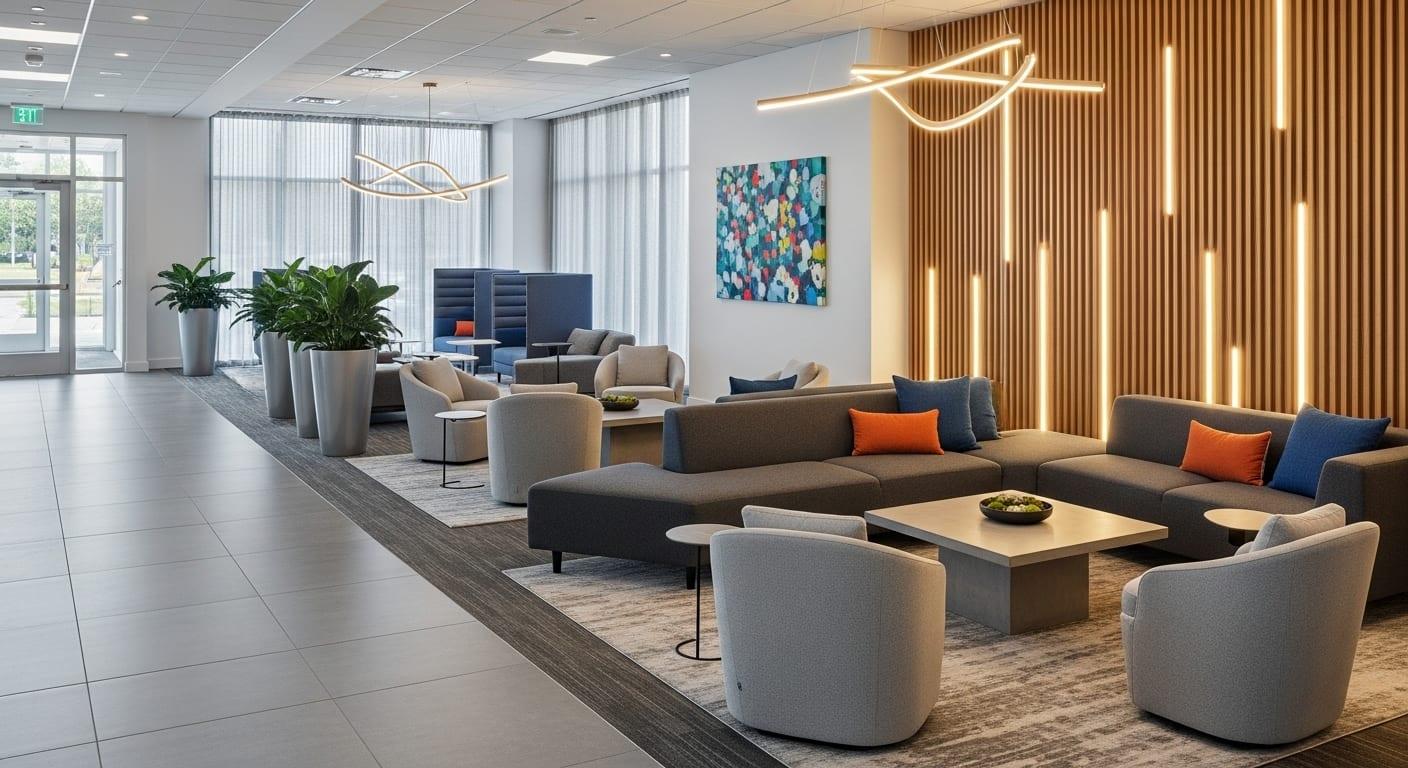
- Public area seating: lobby sofas, restaurant dining chairs, bar stools, and banquettes
- Tables: dining tables, coffee tables, side tables, and writing desks
- Custom millwork items: TV media panels, amenity towers, vanities, and credenzas
Fixtures
- Decorative light fixtures: pendants, wall sconces, table lamps, and floor lamps
- Bathroom accessories: mirrors, towel bars, and vanity hardware (when specified as FF&E rather than base building)
- Window treatments: drapery panels, blackout liners, and valances
- Artwork and decorative accessories
Equipment
- In-room technology: televisions, minibars, and safes
- Commercial kitchen equipment (for restaurant and food-service areas)
- Fitness center equipment
- Business center and meeting room equipment
What Is the Difference Between FF&E and OS&E?
FF&E covers durable capital items (beds, casegoods, seating, light fixtures) that depreciate over a 7 to 12 year renovation cycle. OS&E (Operating Supplies & Equipment) covers consumables like linens, glassware, and uniforms that are expensed and reordered regularly. Both are procured pre-opening but sit on separate budget lines.
FF&E is frequently confused with OS&E. Operating Supplies & Equipment is the proper name. While both are procured before a hotel opens, they serve different purposes and carry different budget treatment.
| Category | FF&E | OS&E |
|---|---|---|
| Full name | Furniture, Fixtures & Equipment | Operating Supplies & Equipment |
| Item type | Durable capital items | Consumable and operational items |
| Typical examples | Beds, casegoods, seating, light fixtures, major equipment | Bed linens, towels, glassware, silverware, uniforms, guest amenities |
| Budget treatment | Capital expense. Appears on balance sheet and depreciates | Operating expense. Expensed and reordered regularly |
| Replacement cycle | Once per renovation cycle, typically every 7-12 years | Replenished quarterly or as consumed |
| Procurement timing | Design development phase; long lead times (10-16 weeks) | Pre-opening; shorter lead times |
| Standards body | Commercial durability and safety standards for contract furniture | Brand operating standards and procurement guidelines |
| Typical vendor | Commercial furniture manufacturer or contract dealer | Hospitality supply distributor |
| Who specifies it | Interior designer, FF&E consultant, or owner’s rep | Operations team or purchasing manager |
A practical rule of thumb: if you replace it once per renovation cycle, it’s FF&E. If you reorder it every quarter, it’s OS&E. Both require careful pre-opening coordination but fall under completely separate procurement workflows.
Why Does FF&E Matter in Hospitality?
FF&E matters because it is the layer of the building guests physically touch every night, and it directly drives satisfaction scores, brand perception, and long-term asset value. Under-specified casegoods, failed seating, or tired finishes trigger negative reviews and costly mid-cycle replacement. Outcomes dwarf any up-front savings on lower-grade products.
FF&E decisions directly shape the guest experience. The tactile quality of a desk chair, the durability of a nightstand drawer, the warmth of a headboard finish. These are the details guests interact with every night. The American Hotel & Lodging Association consistently highlights FF&E investment as a key driver of guest satisfaction scores and property brand positioning. Poor FF&E specification leads to early failure, negative reviews, and costly mid-cycle replacement.
Getting FF&E right the first time protects both the opening timeline and the long-term asset value of the property. It is not simply a design decision. It is a capital investment that performs for 7 to 12 years.
From a commercial perspective, FF&E also represents a substantial portion of a hotel development budget. Inadequate procurement planning, including late decisions, missed lead times, or under-specified items that fail ahead of schedule, compounds cost significantly. Getting FF&E right the first time protects both the opening timeline and the long-term asset value of the property.
How Does FF&E Procurement Work?
FF&E procurement runs as its own track alongside construction, from programming and spec through RFP, shop drawings, production, and install. For the full six-phase process and who owns each step, see our hospitality FF&E procurement guide.
How Much Should You Budget for FF&E?
FF&E budget share varies by property tier, material choices, and brand standards. Our hospitality FF&E procurement guide breaks down the cost drivers and the mistakes that blow FF&E budgets.
DMD Furnishing designs and manufactures custom FF&E for hotels, restaurants, and commercial properties from our facility in Foxboro, MA.
Browse the product catalogFor hands-on support through the specification and procurement process, our FF&E project management services cover everything from initial budgeting through delivery and installation coordination. If you are still shaping scope, our hotel guestroom furniture checklist breaks down the standard items specified in a typical keyed room.
Frequently Asked Questions
What does FF&E stand for?
FF&E stands for Furniture, Fixtures & Equipment. In construction and hospitality development, it refers to movable items that are not permanently attached to a building, including beds, chairs, desks, light fixtures, and appliances. These are typically budgeted and procured separately from base building costs.
What is the difference between FF&E and OS&E?
FF&E covers the large, durable furniture and equipment items (beds, desks, seating, millwork). OS&E: Operating Supplies & Equipment covers smaller consumable or operational items like linens, kitchenware, hangers, and guest amenities. Both are procured before opening but managed under separate budget lines.